Why Sailors Avoid Whistling on Board: Maritime Superstitions Explained
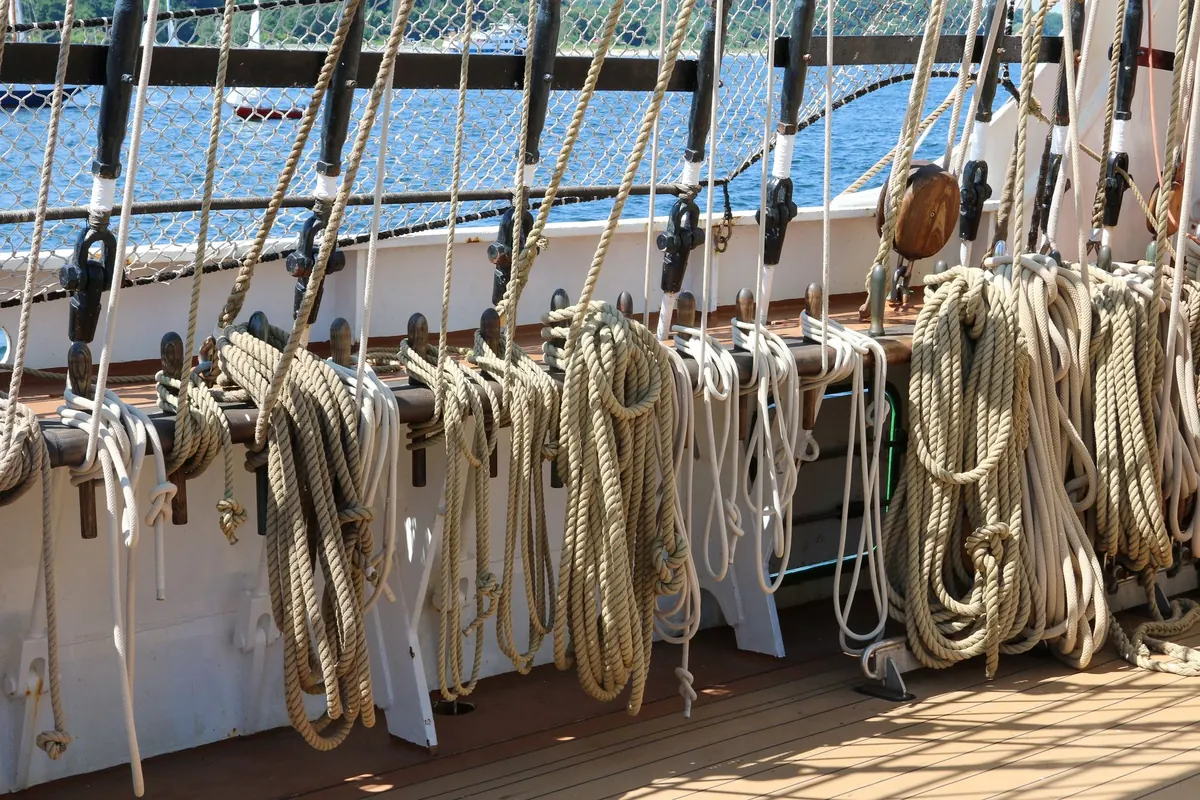
The lines are coiled, the fenders are over, and a guest on the foredeck lets out a low, happy whistle while he works. The skipper's head comes up fast. Nothing is wrong with the rope. Something is wrong with the sound. Ask why and you get a grin and a sentence that has been passed along the pontoon for a few hundred years: you'll whistle up a wind.
Most nautical superstition is like that — small, practical, slightly funny, and stubbornly alive in harbours where nobody seriously believes the sea listens. But the customs aren't random. Some of them preserve real weather sense, some enforce order on a deck where a wrong noise can cost a rope or a finger, and some are simply the way crews have always handled fear. Knowing which is which makes you better company aboard, and a better sailor.
Why a Whistle Was Never Just a Noise
For most of seafaring history the wind was the engine. A crew could trim, reef, tack and bail, but it could not make the air move. So the one thing you did not do was behave as though you could order it.
Whistling sounds like an order. It carries across water in a way speech does not, and it imitates the very thing sailors wanted on their terms and no one else's. The old belief ran that a whistle bought a breeze — and that once the bargain was struck, the wind decided how much to charge. A pleasant afternoon could become a squall by evening. Along some coasts the story went further, and whistling aboard was said to imitate something that had no business being called.
Whistle up a wind and you will get more than you asked for.
The rules shift from coast to coast. In parts of the Mediterranean, whistling was thought to summon the wrong weather entirely. In northern European fishing communities it could be tied to storms, or to calling company you did not want. The detail changes. The shape of the taboo does not.
The Pipe on the Lanyard
Here is the part that gets missed. There was a whistle aboard — a real one, with a purpose, worn on a lanyard around the boatswain's neck. The boatswain's call is a small metal pipe with a high, carrying note, and it was the ship's public address system long before electricity. Different calls meant different things: all hands, officers only, a visitor coming aboard, knock off work, lights out.
That last one gave us a phrase still in daily use. When a crew was piped down, the working day was over and the noise was expected to stop. Pipe down has been telling people to be quiet ever since.
What the rule protects on a modern boat
Now put an untrained whistle in the middle of that system. In the dark, in a fresh breeze, a tuneless whistle from the foredeck can be mistaken for a call. Somebody lets go of a halyard a second early. Somebody steps where someone else is about to swing a winch handle. The taboo may be about wind, but the habit it created — keep the soundscape clean — is still good seamanship. A skipper who doesn't believe a word of the folklore may still wince, because a stray whistle on deck reads as chatter in a place where sound is supposed to mean something.
Words That Cost You a Fair Wind
Whistling is only the loudest example. Boats carry a whole vocabulary of small avoidances, and the sheer variety is the point: every harbour kept its own list. Treat the following as a field guide to what might get you a raised eyebrow, not as law.
- Counting the catch. Fish are weighed and tallied ashore, not celebrated at the rail. Counting ahead of time has always read as tempting the trip to end early.
- Certain words at sea. In many English-speaking crews the word drown was simply not said, and the last word of a voyage was often avoided too. Sailors said they would see you ashore rather than say a word that sounded final.
- Congratulations on luck. Saying a crew was lucky, or thanking them for a good passage in the wrong tone, was thought to spend the luck rather than mark it. A nod and a hand on the shoulder did the job.
- Upturned gear. Hatch covers, buckets and bowls were kept the right way up. An overturned container holds water, and water in the wrong place is the beginning of every bad story.
- Bringing the shore aboard. Flowers, new shoes in a box, and suitcases carried openly onto a fishing boat all had their seasons of suspicion. A packed bag suggests you expect to be leaving in a hurry.
Note how many of these have a plain, unmagical reason underneath. Folklore is usually a memory system. It remembers a bad night and turns it into a rule so the next crew doesn't have to learn it the same way.
Bananas, and Other Cargo With a Reputation
Ask a delivery skipper about bananas and watch the face change. The fruit is unwelcome on a surprising number of boats, and the usual explanations are more practical than mystical: bunches that arrived with spiders and small snakes in them, holds that filled with ripening gas, fast runs on tight schedules with a heavy, badly stowed load. Whether or not each story holds up, the pattern is familiar. A cargo gets associated with a run of bad passages, and after that the cargo takes the blame and the crews take no chances.
You will hear versions of the same thing about redheaded crew, about certain birds landing aboard, and about the first fish of the season. None of it is worth arguing about on someone else's boat. Plenty of it is worth asking about, because the answer usually tells you something about where that crew sails and what has gone wrong for them before.
Renaming a Boat Is a Ceremony, Not a Typo
Naming customs survive because they are useful. A boat's name lives in more places than most owners expect: the documentation, the insurance, the life rings, the log, the minds of the harbour staff who answer the radio. Changing it casually creates a small administrative fog and a large amount of comment.
Where a renaming is going to happen, the traditional approach is deliberate. Purge the old name from the boat and the paperwork, remove it from anything that goes to sea, and settle on the new one before it is spoken aloud. Coins under the mast, a drink poured over the bow, a few words said in front of witnesses — there is no single correct script, and every yard has an opinion. What matters is that you do it once, properly, and tell the crew, so nobody spends the season assuming the boat is mid-transition.
Fridays, Sundays and the First Monday in April
Friday has a long reputation as a poor day to begin a voyage, and the usual explanation is not superstition at all. Crews were paid off on a Friday. Wages in hand, a night ashore, and a departure the next morning made for tired, hurried, badly provisioned starts — and enough of those ended badly that the day itself took on the smell of trouble. Sunday departures drew similar suspicion in many places, and some crews still avoid the first Monday in April.
The useful lesson sits underneath the ritual. If your only window to leave is a Friday, leave. But leave sober, unhurried, and with the forecast checked twice. A superstition that stops you sailing tired is doing its job. One that stops you sailing at all has stopped being useful.
How to Handle It on Someone Else's Boat
You don't have to believe any of it. You do have to be easy to sail with. A short routine covers almost every situation:
- Ask before you laugh. "Is whistling actually a thing on this boat?" gets you a story and a reputation for good manners.
- Follow the house rules for the week. Cheaper than the argument, and you learn something about how the boat is run.
- Take your whistling ashore. The pontoon, the shower block and the walk to the car park are all safe territory.
- Don't smuggle bananas onto a delivery. Even as a joke. Especially as a joke.
- Show up for the ceremony. If there is a renaming, a blessing, or a bottle to be broken, be there and hold something.
- Keep the half of the lore that earns its place. Watch the sky, secure the gear, check the forecast, and listen when the oldest person on the dock says the weather is turning.
That is the honest summary of maritime superstition: a few rules that cost nothing, wrapped around a great deal of hard-won experience. The whistle ban is the cheapest of them. Keep quiet on deck, let the wind make its own decisions, and you will be welcome on the next trip out.
Photo: Wolfgang Wendefeuer / Pexels