Harbor Flags and Signals: A Maritime Culture Explainer
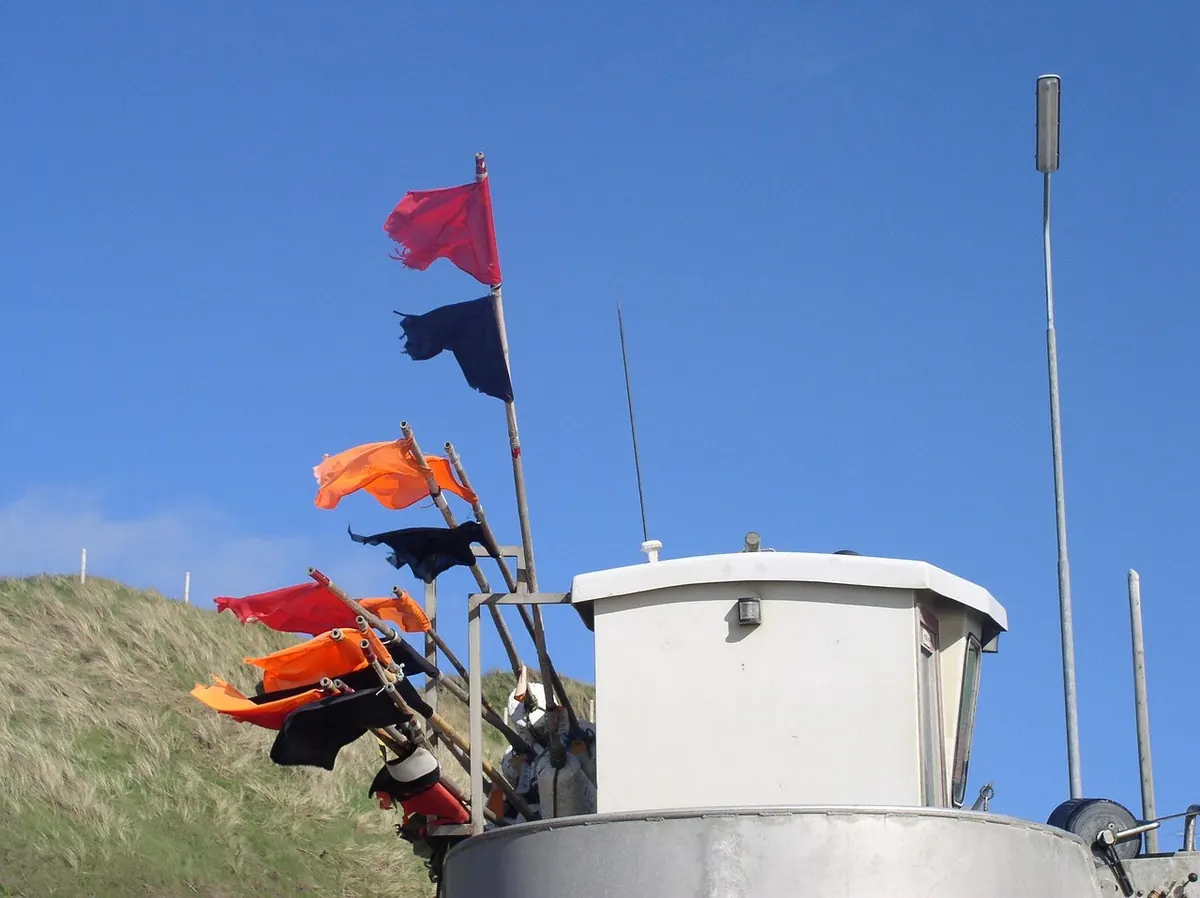
A harbor is never silent, even when it looks idle. Stand at the edge of a working quay for ten minutes and you will notice small conversations happening everywhere: a yellow flag snapping on a stern, a black ball hoisted in the rigging, a pair of cones on a buoy, a red light on a lock gate. None of it is decoration. Ports run on a shorthand that predates radio by centuries and still works when radios fail, and once you can read a little of it, a walk along the waterfront becomes far more interesting than a walk along a beach.
What follows is not an exam syllabus. It is the handful of signals a visitor is most likely to see, why they exist, and how to behave around them.
Flags That Actually Say Something
Start with the flags that identify a vessel rather than instruct anyone. The ensign flying at the stern tells you the ship's nationality; the smaller flag on the forward mast or spreader is usually a courtesy flag, hoisted for the country whose waters the ship is visiting. A company flag or house flag may fly from the masthead. These are the harbor's equivalent of a name badge and a business card.
The interesting flags are the working ones. Most come from the International Code of Signals, a system of single-letter flags each carrying a full sentence. A ship only has to hoist one cloth to say something urgent or specific, and every other vessel in sight is expected to understand it.
- Q, plain yellow. Historically a quarantine request; in practice, a vessel awaiting customs or health clearance. Keep your distance and do not walk up the gangway.
- H, red and white. A pilot is on board. You will see it on ships entering or leaving a port with compulsory pilotage.
- G, yellow and blue stripes. The vessel is asking for a pilot.
- P, the Blue Peter. Blue with a white centre block, flown as the ship prepares to sail. Crew are expected back on board; visitors are expected off.
- B, red. The vessel is loading, carrying or discharging dangerous goods. Common on tankers and bunker barges.
- A, white and blue swallowtail. A diver is down. Give the vessel a wide berth and pass slowly — this one matters.
- V and W. Requests for assistance and for medical help respectively.
- L, yellow and black quarters. "Stop your vessel immediately" — usually flown by a patrol boat that wants a word.
You do not need to memorise the code. Learn the yellow flag and the Blue Peter, and you will already understand the two most common stories playing out on a commercial quay: a ship waiting for permission, and a ship about to leave.
Shapes in the Rigging: Day Shapes
Not every message is cloth. Black shapes hoisted in the rigging tell other vessels what a ship is doing and, more importantly, what it cannot do. They are read by day the way navigation lights are read by night.
A single black ball means the vessel is at anchor. Three balls in a vertical line means aground. Two balls mean not under command — steer clear, because the crew cannot manoeuvre. A cylinder means the vessel is constrained by her draft and cannot leave the channel, which is why you see it on deep-loading bulkers in narrow approaches. A cone pointing downwards on a yacht means she is motor-sailing, a detail that matters in a collision inquiry. Two cones joined point to point mean a vessel is trawling.
These shapes are deliberately simple: a ball, a cone, a cylinder. They have to be recognisable at half a mile through binoculars, in haze, against a bright sky. When you spot one, look at the water around the vessel rather than the vessel itself — the shape usually explains why a ship is sitting still in the middle of a channel.
Buoys and the Colours of the Channel
The floating furniture of a harbor follows the IALA buoyage system, and it splits the world into two regions. In region A — Europe, Africa, Asia, Australia — red marks the port side of a channel as you enter from seaward, and green the starboard side. In region B — the Americas, Japan, Korea and the Philippines — the colours are reversed. This is the single most useful thing a visiting sailor can learn about a new country, and the single easiest way to embarrass yourself if you assume.
Cardinal marks
Yellow and black buoys with cone topmarks indicate the safe side to pass: north, east, south or west of a hazard. The topmarks are the giveaway — two cones pointing up for north, base to base for east, point down for south, point to point for west. At night, read the flashing rhythm instead; the patterns follow a logic you can look up and then recognise for life.
Marks worth knowing at a glance
Red and white vertical stripes mark safe water, usually a channel entrance. Yellow marks are special marks: pipes, cables, racing circuits, spoil grounds, swimming areas. Black with a red band and two black balls is an isolated danger, and the water around it is exactly as bad as it looks. If you are walking a breakwater rather than steering a boat, these are the buoys that explain why the small boats take the strange zigzag line they do.
Signals Ashore: Lights, Boards and Flagpoles
Harbor communication does not stop at the water. Locks, bridges, tide gates and dock entrances use traffic lights: red means hold, green means proceed, and combinations of red and green often signal that small craft may enter while large vessels wait or vice versa. The exact scheme is local, and it is published in the port's notices to mariners rather than on a tourist board.
Watch the flagpole by the harbor office too. In North America, a single red pennant warns of small craft advisory conditions, two pennants mean a gale, and square red flags with black centres indicate storm and hurricane warnings. European ports vary widely, and many hoist lights rather than flags at night. Wherever you are, the local convention is worth asking about at reception — a two-minute question that makes every later glance meaningful.
Markings Underfoot
Some of the most useful signals are painted, and visitors walk straight over them. Quay edges carry yellow or white safety lines; everything between the line and the water belongs to cranes, vehicles and mooring parties. Bollards are numbered so that a ship's agent can say "make fast on fourteen" and be understood instantly. Draft marks painted at bow and stern let a loading officer read how deep a hull sits — in metres in most of the world, in feet in the United States.
Vertical gauges on the quay wall show tide height. Coloured pipes and hydrants carry fuel, fresh water or firefighting supply, and their colours are port-specific. You will also see stencilled notices on fences and sheds that mean exactly what they say. Read them before you read the view.
Ports are not unfriendly places. They are places where everyone assumes you already know where the line is.
A Practical Field Guide for Port Walks
None of this requires a course. It requires a little attention and a bit of respect for people who are at work.
- Bring binoculars. A cheap pair opens up the whole harbor: topmarks, draft marks, the flag on a distant trawler.
- Check the tide table. Half the interesting machinery — gates, slipways, floating pontoons — only makes sense against the state of the tide.
- Stay behind painted lines. Never cross a yellow quay line, climb a ladder, or step onto fenders and mooring lines.
- Look up before you photograph. Working cranes and suspended loads are not backdrops.
- Listen before you ask. If a VHF radio is audible at the marina office, listen to the traffic and you will soon hear the harbor's rhythm. Do not transmit.
- Ask locally. Every port has its own quirks, from storm flag schemes to the meaning of a particular jetty light. Harbor offices and marina receptions answer these questions gladly.
Do that for a few visits and the harbor stops being scenery. The yellow flag on a tanker, the slow-blink of a red light on a lock gate, the black ball hoisted over a moored ship — each one is a sentence, and most of them are perfectly happy to be read by anyone standing on the quay with a bit of patience.
Photo: Suedelbien / Pixabay